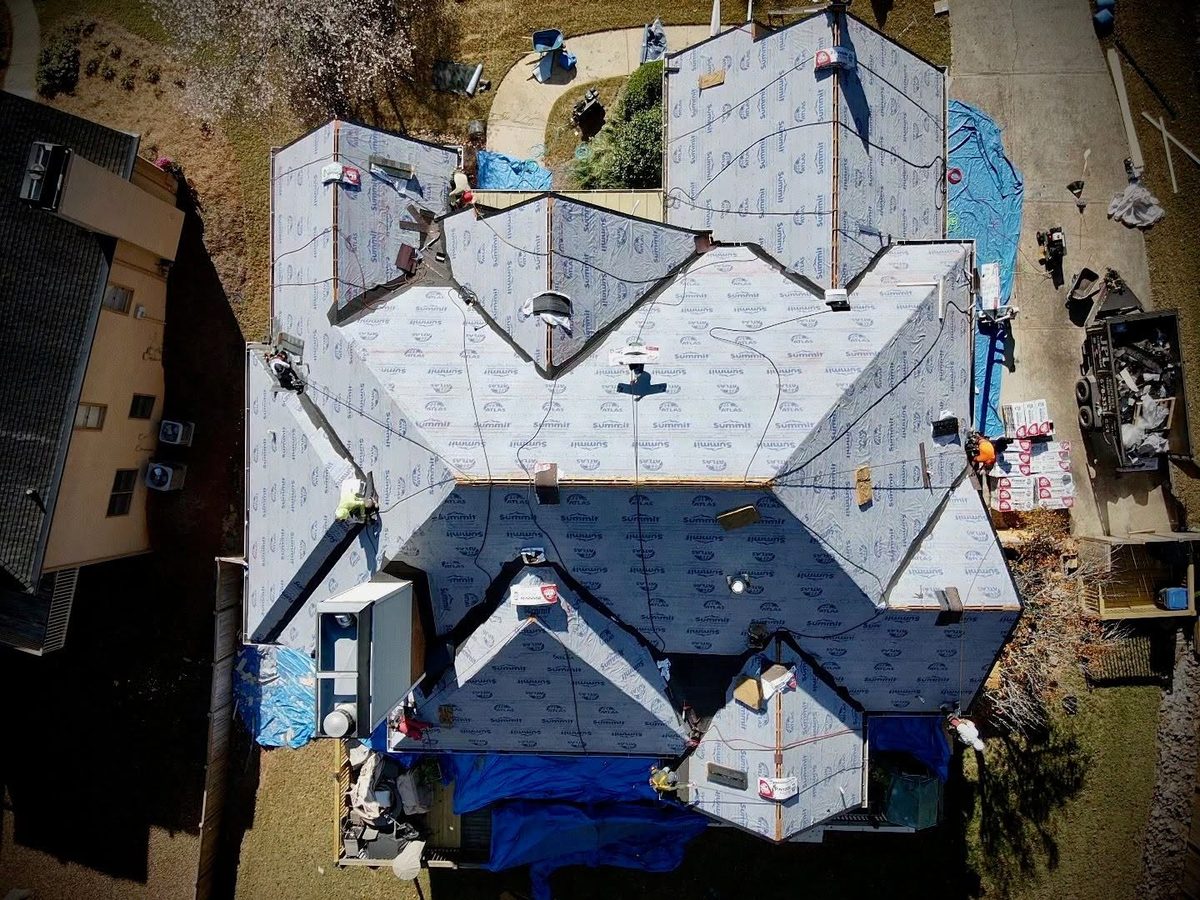
Flat Roofing That Actually Works
Flat and low-slope roofs have a reputation for leaking, and it’s often deserved — but the problem is almost always poor installation, not the material itself. A properly installed membrane system on a flat roof will last 20-30 years without a single leak. The key is getting the details right: proper drainage slope, sealed seams, correct fastening patterns, and well-flashed penetrations.
Vintage Roofing has installed and maintained flat roofing systems on commercial buildings, multi-family structures, and residential additions across North Georgia and Tampa Bay since 2008. We work with all three major membrane types and recommend the right one based on your building’s specific conditions.
EPDM, TPO, or PVC: Which One?
Each membrane system has distinct strengths. The right choice depends on your building type, local climate, foot traffic needs, and budget.
- EPDM (Ethylene Propylene Diene Monomer) — A synthetic rubber membrane that’s been the workhorse of commercial roofing for 50+ years. Extremely durable, UV-resistant, and the most affordable flat roofing option. Black EPDM absorbs heat (good for heating-dominated climates in North Georgia), while white EPDM reflects it. Typical lifespan: 25-30 years.
- TPO (Thermoplastic Polyolefin) — A single-ply membrane that’s heat-welded at the seams, creating a watertight bond stronger than the membrane itself. White TPO reflects solar heat, reducing cooling costs by 10-20%. The most popular choice for new commercial construction. Typical lifespan: 20-25 years.
- PVC (Polyvinyl Chloride) — The premium flat roofing option. Heat-welded seams like TPO, but with superior chemical resistance — ideal for restaurants, commercial kitchens, and buildings with rooftop equipment that might leak oils or chemicals. Most fire-resistant of the three. Typical lifespan: 25-30 years.
Installation Methods
How the membrane is attached to the roof deck matters as much as which membrane you choose. We use three methods depending on the building structure and local wind loads:
- Mechanically attached — Fastened to the deck with screws and plates, then covered by the overlapping membrane. Best for steel decks and high-wind areas.
- Fully adhered — Bonded directly to the insulation or deck with adhesive. Creates a smooth, wind-resistant surface. Preferred for occupied buildings where noise from wind uplift would be a problem.
- Ballasted — Laid loose over the deck and held in place by river rock or concrete pavers. Only suitable for structurally strong buildings that can handle the extra weight. Common on large commercial roofs.
Maintenance Makes the Difference
Flat roofs need periodic attention in a way that steep-slope roofs don’t. Standing water, debris accumulation around drains, and UV degradation at seams are the three things that shorten a flat roof’s life. We offer maintenance programs that include biannual inspections, drain clearing, seam resealing where needed, and written condition reports so you can plan capital expenditures years in advance.