What's Really Hiding Under Your Shingles
Most homeowners only think about their roof when something goes wrong inside the house - a water stain on the ceiling, a damp spot in the attic. By that point, the damage has usually been building for a while. That's the tricky thing about roofs. The real problems are almost always hidden underneath.
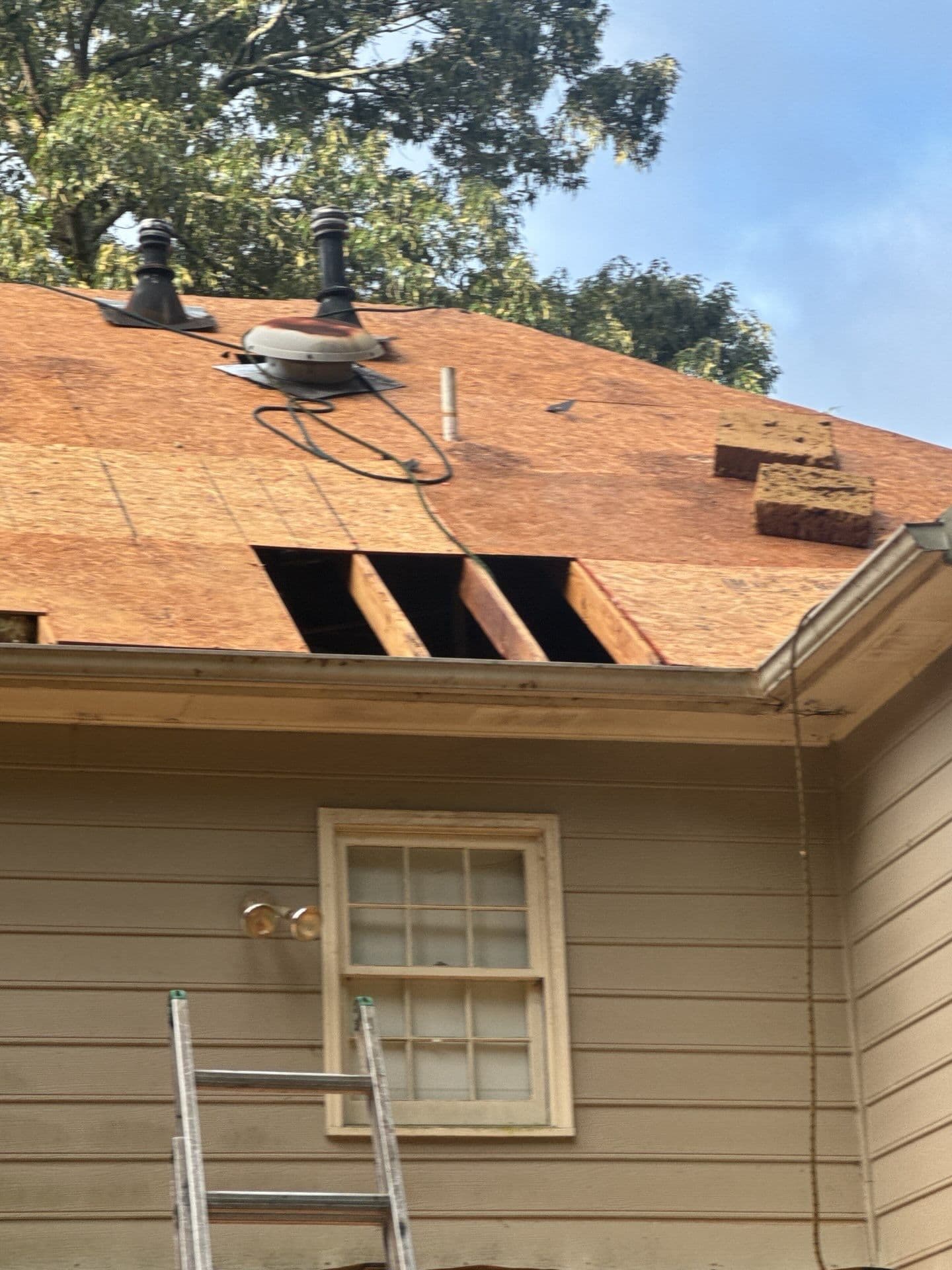
When we pull back old shingles, we get a clear look at what's actually going on with the roof deck below. Sometimes it's fine. Other times, we find soft spots, rot, or sections of decking that have taken on water damage over time. You can't patch your way out of that. It has to be addressed at the source before anything new goes on top.
That's exactly why we don't just swap shingles and call it a day. A proper roof replacement means taking the time to inspect the deck, deal with any damaged sections, and make sure the structure underneath is solid before we move forward. Skipping that step is how you end up with a brand-new roof sitting on top of a problem that's still quietly getting worse.
It's not the flashiest part of the job - nobody gets excited about looking at bare plywood. But it's honestly where the real work happens. Getting this right is what separates a roof that lasts from one that has you calling someone back out in a few years.
If your roof has you second-guessing - whether it's age, a recent storm, or just a hunch that something's off - it's worth having someone take a look. What's underneath matters just as much as what's on top.