Getting a Home Storm-Ready with a Full Roof Replacement
Storm season has a way of exposing every weakness in a roof. Wind, heavy rain, and hail don't care how old your shingles are or how long you've been putting off that inspection. What matters is whether your roof is ready when the weather hits - and that's exactly the mindset behind work like this.
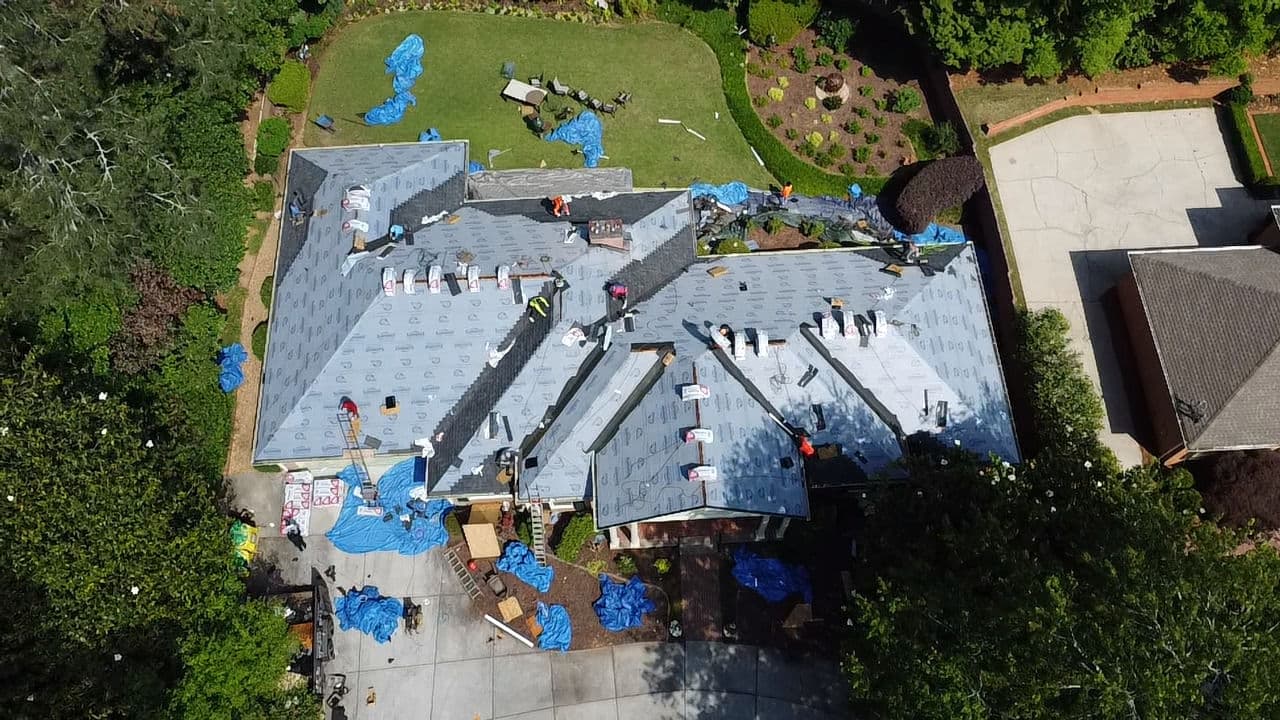
Here's what we were working with - a large, multi-slope residential roof in the middle of a full replacement. The old material is stripped, the decking is exposed, and fresh underlayment is being laid across every square foot of that roof. You can see the crew spread out across the different sections, staging shingle bundles and working methodically from one slope to the next. That kind of organized approach on a roof this size matters. It keeps the job moving and makes sure no section sits exposed longer than it needs to.
The underlayment you see covering the decking isn't just a temporary fix. It's a critical layer of protection that sits between your decking and your shingles. It acts as a water barrier if anything gets under the shingles during a storm. On a roof this complex - with multiple valleys, hips, and pitch changes - making sure that layer is installed correctly is just as important as the shingles themselves.
A lot of homeowners wait until there's a visible problem before they call. A leak in the ceiling, a shingle in the yard after a storm. By then, there's often more damage underneath than what's showing on the surface. Getting ahead of it - before storm season is in full swing - is almost always the smarter and less expensive call. A solid roof replacement done right gives you years of confidence, not just a patch that buys you another season.
If your roof has you second-guessing whether it can handle what's coming, that feeling is usually worth paying attention to. A proper inspection will tell you exactly where things stand and what your options are.